
A new look for Chioco, and the story behind it.
Every so often, you just need to rearrange the furniture. It’s often not the fault of the room itself. Perhaps the people using it have changed. Or that you’ve learned more about what will serve the people better. And sometimes its just fun to change things up.
That's the simplest explanation we have for the new Chioco brand.
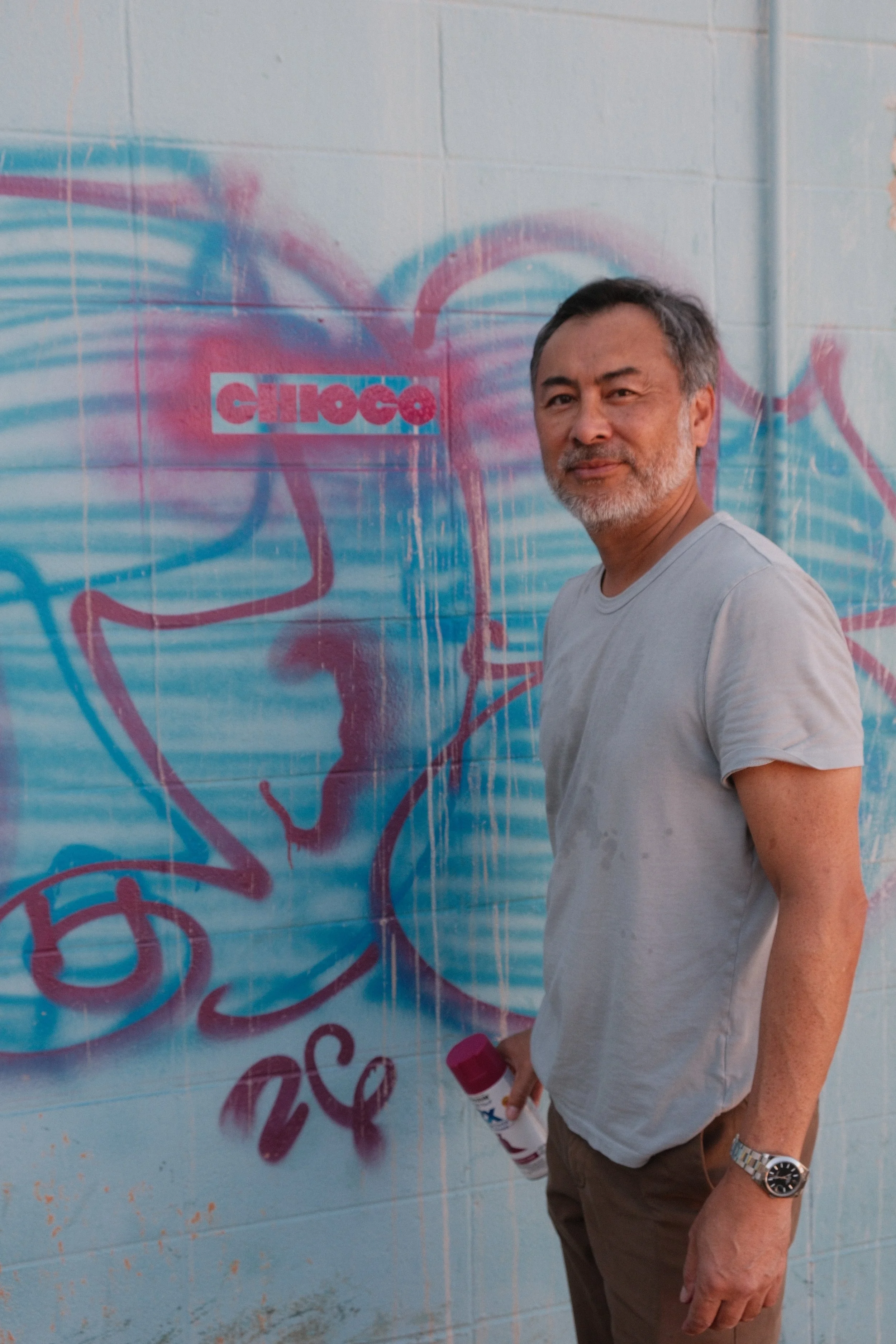
Jamie Chioco tagging our new logo at the new Kick Pleat construction site
Where we started
Jamie started Chioco Design in 2005 as a small architecture and design practice in Austin. His first office space was a small space above a Japanese restaurant on Guadalupe and 35th St. Other than the constant smell of food it was filled with natural light and looked out to a canopy of Live Oak trees that screened the busy street below.
Over the years the work found its range: restaurants and bars, homes, offices, old industrial buildings given a second life. Some of those places turned into Austin’s most beloved establishments, where friends and colleagues gather on repeat, and leave long after they intended, which is still the compliment we like best. Along the way the work started leaving town too, to Nashville, Denver, Santa Monica, and cities across Texas.
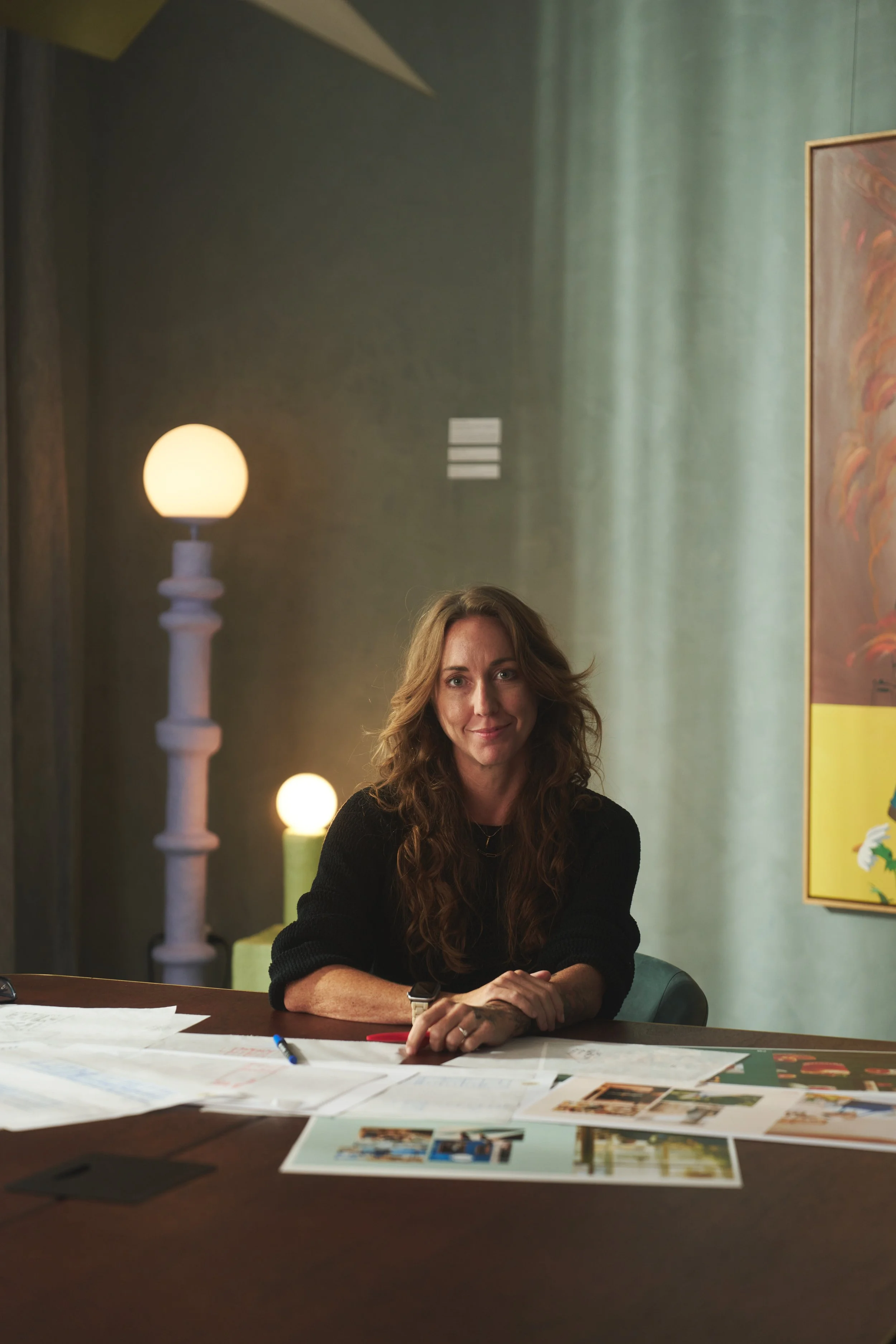
Christy at the Chioco office in East Austin
What changed
Two things, mostly.
The first is Christy. Christy Taylor joined us in 2018 and became a partner in 2020, and that turned Chioco from one person's practice into a partnership.She came to Austin from South Louisiana in 2009, and she holds two master's degrees: one in architecture from LSU and one in architectural history from UT. That second degree tells you a lot about her. Christy cares as much about why buildings matter as how they get built, and her research has taken her from Brazil to a teaching post at Lovely Professional University in Punjab, India. Her project experience covers the full range, from big educational and mixed-use buildings where program and efficiency rule to smaller, more crafted work where every detail gets its moment. In 2023 she served as president of AIA Austin.
Having a partner changed more than the letterhead. It changed how we make decisions, who we hire, and what kind of firm we want to be twenty years from now.
The second is what we do. Clients kept asking us to take on more of their projects, so we did.
Interiors is now a full practice of its own, led by Emily Cano. Emily has built her career in Austin and San Francisco on everything from gourmet burger spots to the offices of global media companies, and she's at her best in the layer people actually touch: custom furniture, lighting, pieces made by hand alongside fabricators and artisans. She's also the one who makes sure a beautiful idea survives the trip from drawing to finished room, which anyone who has lived through a project knows is the hard part. For a firm that believes design should be felt, having Emily lead interiors closes the distance between the building and the life that happens inside it.
And this year we added brand development, led by Matt Hovis.
Why an architecture firm is doing brand work
Fair question.
Jamie likes to say you can't throw a rock in this town without hitting an architect (in the face). He's not wrong. Austin is full of very good firms, and good work on its own doesn't set anyone apart for long. What sets you apart is how it feels to work with you, and how much thought goes into everything around the work.
Our clients are living the same thing in their own industries. A restaurant opening this year is competing with every great restaurant on the block, and every one on your phone. A beautiful room helps a lot. A beautiful room with a clear idea behind it, carried through the name, the menu, the sign on the door and the way someone says hello when you walk in, helps a lot more.
When the people shaping the brand and the people shaping the building sit at the same table, those things stop pulling against each other. The business strategy shows up in the floor plan. The floor plan shows up in the story. We think the best places come from one considered idea, held all the way through, and it's a lot easier to hold onto it under one roof.
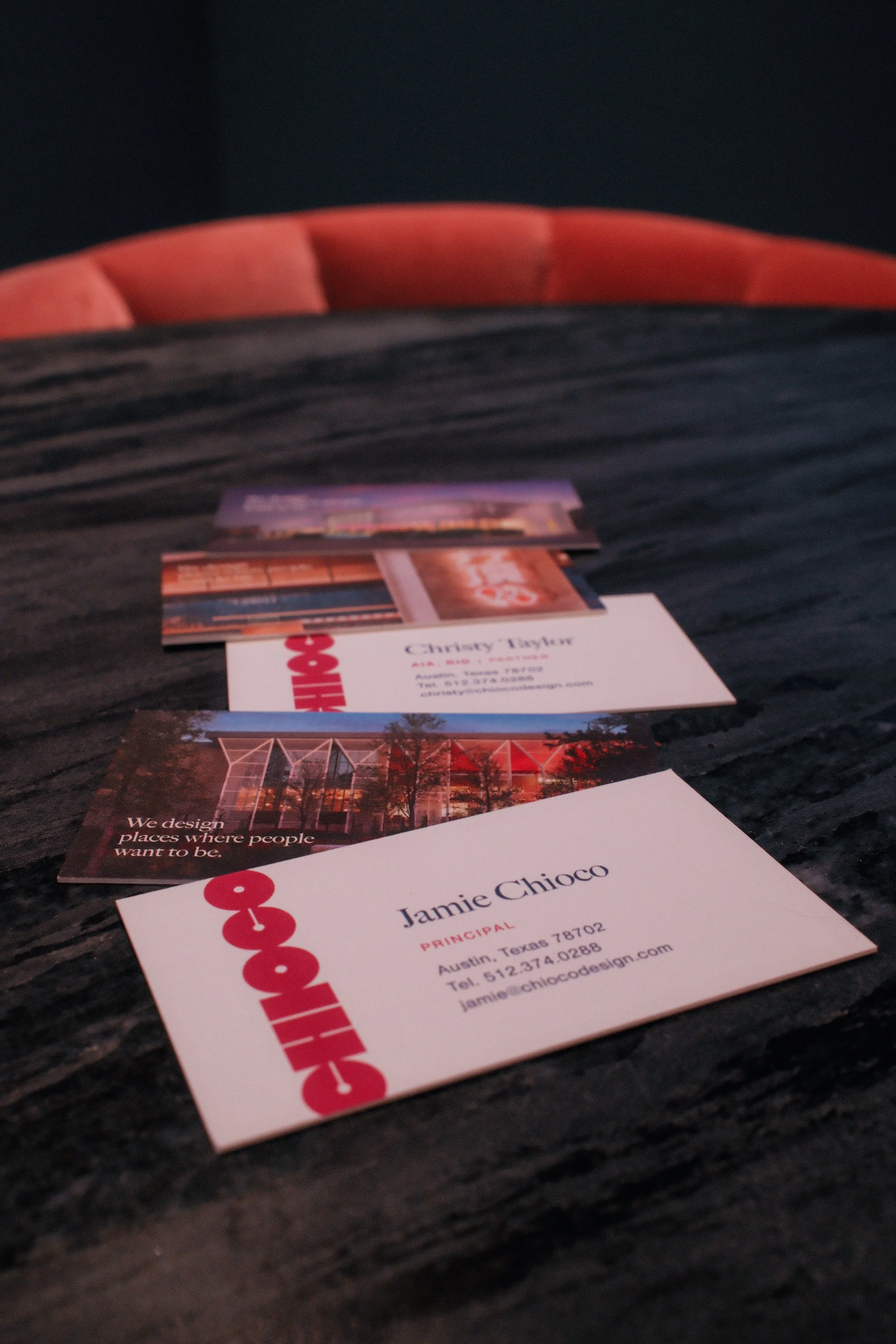
So why rebrand ourselves?
Because our old identity described a firm we'd outgrown.
Inside the studio, a lot had changed. A new partner, new practices, a home at 1515 E Cesar Chavez that we designed for ourselves. This is us catching up to ourselves. It isn't a reinvention so much as saying it out loud: this is who we are now.
About the pink
Anyone who knows our work knows we believe elegance doesn't need to shout. Our buildings are meant to settle into their neighborhoods and get better with age. But in considering our own company identity, we didn’t want to shy away from the fun in our work, because honestly, there's a lot of joy in our office. We argue about door hardware, but we laugh a lot. We love what we do and we're no longer keeping that under wraps. Our industry is full of austerity, straight-faced and serious button-up-edness. And that’s just not who we are.
What hasn't changed
The way we work. We still think of design as an act of hosting: paying attention, thinking ahead, sweating the small stuff so nobody else has to notice it. We still care about the weight of a door and the way light lands on a wall at seven in the morning. We still measure success the same way, by whether people keep coming back to the places we make.
If you're in East Austin, come say hello. We open up the studio for art openings and parties throughout the year, and there's usually something good to drink.
We design places where people want to be. Ours included.